
To keep long-distance moving costs from San Diego manageable, start by assessing what you’ll move; less weight means lower costs. Compare 3-5 quotes from movers, ensuring you understand possible hidden fees. Timing is crucial—move during off-peak seasons like fall to save money. Decluttering before you move not only lightens your load but can also add funds if you sell items. Adopt DIY packing by using recycled materials and labeling boxes clearly. Review the services offered by movers to find the best fit for your needs, and budget for unexpected expenses by planning a contingency fund. Explore these tips further for a budget-friendly move.
Assess Your Moving Needs

When you’re planning a long-distance move, it’s crucial to thoroughly assess your moving needs. Start by evaluating the total weight and volume of your belongings. Moving companies often calculate moving costs based on these factors, and heavier loads can significantly increase expenses.
Consider the size of your current home—whether it’s a studio, 1-bedroom, or 2-bedroom—as this will help estimate costs, which can range from $1,500 to $9,000 depending on your move’s size and distance. Additionally, understanding moving costs can help you budget effectively and avoid unexpected expenses.
Next, assess any specialty items you need to transport. Items like pianos or large appliances might require extra care and therefore incur additional charges. By identifying these early, you can better prepare for potential expenses.
Creating an inventory of your possessions is a good idea. By doing so, you can also declutter, which means getting rid of items you no longer need. This step can help reduce both weight and volume, leading to lower moving costs.
Lastly, think about your timeline. Moving during off-peak seasons, like fall or winter, can offer lower rates and better service availability. This strategic planning might save you hundreds of dollars and make your move smoother.
Obtain Multiple Quotes
Why settle for the first quote you receive when you can potentially save money by obtaining multiple quotes? By reaching out to different moving companies, you create a competitive landscape that allows you to compare prices and services for your long-distance move. The average cost of long-distance moves can vary significantly, ranging from $900 to over $4,500. Gather at least three to five quotes. This way, you’re more likely to uncover potential discounts or better service options that fit your needs and budget.
When asking for quotes, give detailed information about your move, like the distance, size of your home, and any specialty items. This helps ensure accurate estimates.
Don’t forget to check for hidden fees. Ask each company for a breakdown of costs. This way, you won’t be surprised by any unexpected charges later.
Timing is also crucial. Request quotes mindful of peak seasons, as these can affect pricing. Off-peak seasons often offer lower rates, potentially saving you money.
Before making a decision, look at customer reviews to see others’ experiences. This information can guide you in choosing the best option.
Choose the Right Timing

Timing can make or break your moving budget, so it’s essential to choose wisely. When planning a move in San Diego, consider scheduling during off-peak seasons like fall and winter. These times often offer significantly lower rates due to decreased demand, potentially saving you hundreds of dollars.
Avoid weekends and holidays, as these are the busiest times for moving services, leading to higher costs. Instead, aim for weekday moves to secure better pricing and availability.
Booking your moving services at least 4-6 weeks in advance can also help you snag early-bird discounts and better service options. This way, you’re not only organizing your move more efficiently but also enjoying cost benefits.
Additionally, consider moving mid-month when demand is lower compared to the beginning or end of the month. These periods are popular for lease changes, which can drive up costs.
Declutter Before Moving
Decluttering before a move isn’t just about tidying up; it’s a strategic step to cut down on moving expenses. Understanding that each item you decide to keep adds to the moving costs is crucial, as movers charge based on weight and volume.
By sorting your belongings into categories like keep, donate, sell, or discard, you make the packing process more efficient and reduce stress on moving day. This simple action can save you hundreds of dollars and also allows you to explore budget-friendly strategies that can further decrease your moving costs.
Selling unwanted items through a garage sale or online marketplaces can be quite lucrative, often bringing in $100 to $500. This not only helps you save money but also reduces the number of items you need to move.
Donating gently used items is another great option. It aids those in need and offers potential tax deductions. The IRS allows you to deduct the fair market value of donated goods, which can be helpful during tax season.
Research shows that a decluttered home leads to efficient moving, saving up to 30% of the time needed for packing and unpacking. This makes your transition smoother and less costly, ensuring a more organized and stress-free moving experience.
DIY Packing Strategies

When you’re planning a long-distance move, efficient packing can save you both time and money.
Start by collecting free or recycled boxes from local stores or friends, and use clothing or towels to protect fragile items, reducing the need for expensive packing materials.
Clearly label each box with its contents and the room it belongs to, making unpacking at your new home much smoother and more organized.
Efficient Packing Techniques
Packing efficiently for a long-distance move can save you both time and money. By using high-quality packing materials like sturdy boxes and bubble wrap, you protect fragile items and avoid the extra moving costs that come with damaged belongings.
A well-thought-out packing timeline helps you stay organized and ensures you pack systematically. This prevents last-minute chaos and the expense of rushing out for additional packing supplies. Remember, efficient packing techniques can make your move smoother.
Here are some tips to help you pack effectively:
- Use Clear Labels: Clearly label each box with its contents and the room it belongs to. This saves time during unpacking and helps avoid repurchasing lost items.
- Free or Recycled Supplies: Take advantage of free or recycled packing supplies, like old newspapers or cardboard boxes from local stores. This cuts down on packing costs and is environmentally friendly.
- Pack Heavy Items in Smaller Boxes: By packing heavier items in smaller boxes, you make them easier to carry, reducing the risk of injury or needing extra help.
- Protect Fragile Items: Always use bubble wrap or similar materials to cushion fragile items, ensuring they arrive safely.
Cost-Saving Material Alternatives
Embarking on a long-distance move doesn’t have to break the bank when you employ cost-saving packing strategies. Start by opting for recycled materials like old newspapers, towels, and blankets instead of buying expensive bubble wrap and packing paper. This switch can significantly reduce your packing supply costs.
For free boxes, check with local grocery or liquor stores as they often have sturdy unused boxes available. This not only cuts down on packing expenses but also supports recycling efforts.
Consider investing in plastic bins. While they’ve an upfront cost, plastic bins are a great alternative to cardboard boxes. They’re durable, reusable, and offer long-term savings, especially if you anticipate future moves.
Packing clothes and shoes in suitcases and bags maximizes space and reduces the need for extra boxes, keeping your items organized and transportable.
Hosting a packing party with friends or family is another fantastic idea. Provide some snacks in exchange for their help, and you’ll save on labor costs while making the process more enjoyable.
These cost-saving strategies not only make your move more affordable but also help you organize items efficiently, ensuring a smoother transition to your new home.
Organizing for Easy Unpacking
After implementing cost-saving packing strategies, it’s time to focus on organizing for easy unpacking. Start by packing room-by-room, labeling each box with its contents and the designated room in your new home. This will help streamline the unpacking process and reduce confusion.
To make it even easier, use color-coded labels for different rooms. This way, movers will know exactly where each box should go.
Here’s a helpful plan:
- Pack a “first-night” box: Include essential items like toiletries, a change of clothes, and basic kitchen supplies. This box ensures you have immediate access to necessities upon arrival.
- Use clear plastic bins: For frequently used items, clear bins allow quick visibility of their contents and can be easily stacked, making the unpacking phase more efficient.
- Take photos of setups: Before disassembling electronics and furniture, photograph their current setup. This will make reassembly and organizing in your new space much simpler.
- Color-code your labels: Assign different colors to each room to reduce moving day chaos and help everyone know where each box belongs.
Compare Moving Services
When comparing moving services, it’s crucial to look at the specific offerings each company provides, like packing help, insurance options, and handling of special items.
You’ll also want to analyze their pricing structures, focusing on whether they offer binding or non-binding estimates, to avoid surprise costs.
Evaluate Service Offerings
Choosing the right moving company’s services is crucial for a smooth long-distance move from San Diego. To ensure a hassle-free experience, you should compare movers based on their service offerings and customer reviews. This helps in finding the best value for your needs.
Here’s a guide to help you evaluate:
- Service Offerings: Look for companies that provide a wide range of services, including packing services and storage solutions. This ensures comprehensive support for your long-distance move.
- Customer Reviews: Check online reviews to learn about other people’s experiences. Positive feedback can indicate reliable service, while negative reviews might highlight issues like hidden fees or poor service quality.
- Insurance Options: Make sure the company offers insurance to protect your belongings. This adds peace of mind in case of any damage during transit.
- Unexpected Costs: Ask if they provide binding estimates to avoid unexpected costs. Be aware of hidden fees, like surcharges for access challenges or fuel costs.
Analyze Pricing Structures
To effectively analyze pricing structures for long-distance moving services, it’s important to understand the various factors that influence costs. Moving costs can vary significantly based on the distance and weight of your belongings.
For instance, long-distance moves can range from $4,000 to $10,000 depending on your home’s size and the services you require. For a 1,000-mile move, you might pay between $3,000 to $7,000, while a 500-mile move could cost $2,000 to $5,000, highlighting how distance impacts pricing.
When you compare multiple quotes, you’ll notice that moving companies often provide binding and non-binding estimates. A binding estimate guarantees a fixed price, while non-binding estimates might change based on the shipment’s final weight.
It’s wise to request an estimate breakdown to understand potential fees, such as fuel, tolls, and packing supplies, which can add unexpected costs.
As you assess service offerings, consider additional costs like transportation expenses. By carefully reviewing pricing structures and comparing different companies, you can find the best value for your long-distance move.
This approach ensures you make informed decisions and avoid surprise expenses.
Budget for Hidden Costs
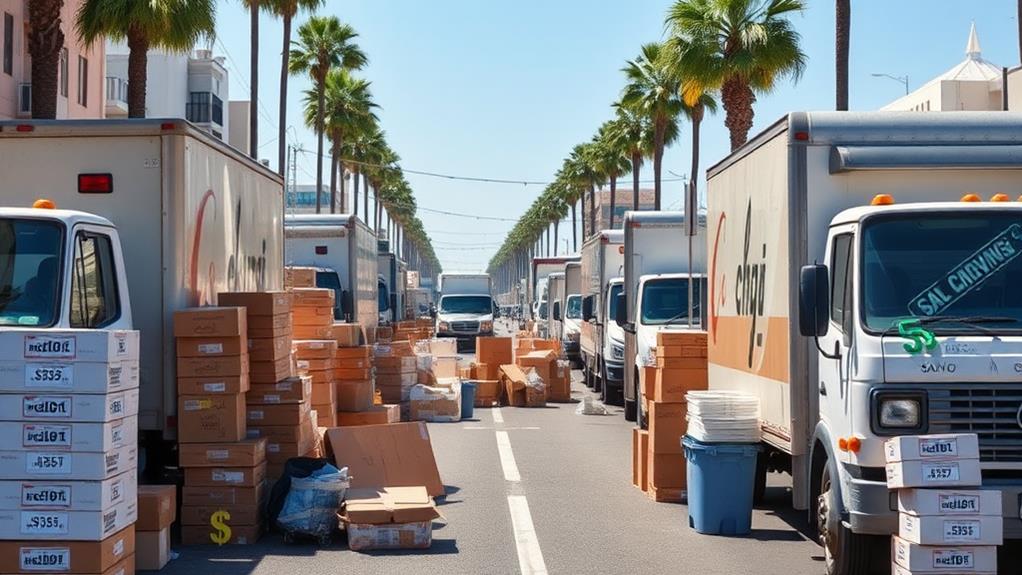
Planning a long-distance move involves more than just packing boxes and hiring a truck; it’s crucial to budget for hidden costs that can sneak up on you. These hidden costs often include fuel expenses, tolls, and extra fees for packing supplies.
To avoid surprises, always request a detailed breakdown of potential moving costs from your moving company. This helps you spot any hidden fees or surcharges upfront.
Consider these steps to manage unexpected expenses effectively:
- Specialty Items: Communicate any special items, like pianos or artwork, to your movers. These can incur extra charges if not disclosed in advance.
- Contingency Fund: Set aside a contingency fund, about 10-20% of your total budget, to cover unexpected delays or overnight storage fees.
- Insurance Coverage: Opt for full-value protection for valuable items. It may increase upfront costs but can save you money if your belongings are damaged or lost.
- Packing Supplies: Estimate the cost of packing supplies like boxes and tape, as these can add up quickly if not planned for.
Conclusion
Moving long distance can seem overwhelming, can’t it? But with the right strategies, you’ll manage costs effectively and make the process smoother. Start by assessing your needs, obtaining multiple quotes, and choosing the best time to move. Declutter your belongings, pack smartly, and compare different moving services. Don’t forget to budget for those hidden costs! By following these tips, you’ll be well-prepared for your move from San Diego, ensuring a successful transition to your new home.
Leave a Reply